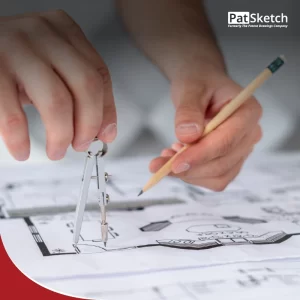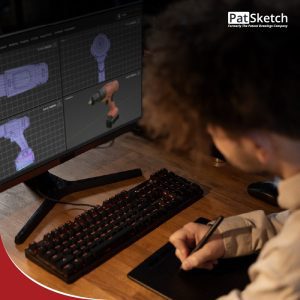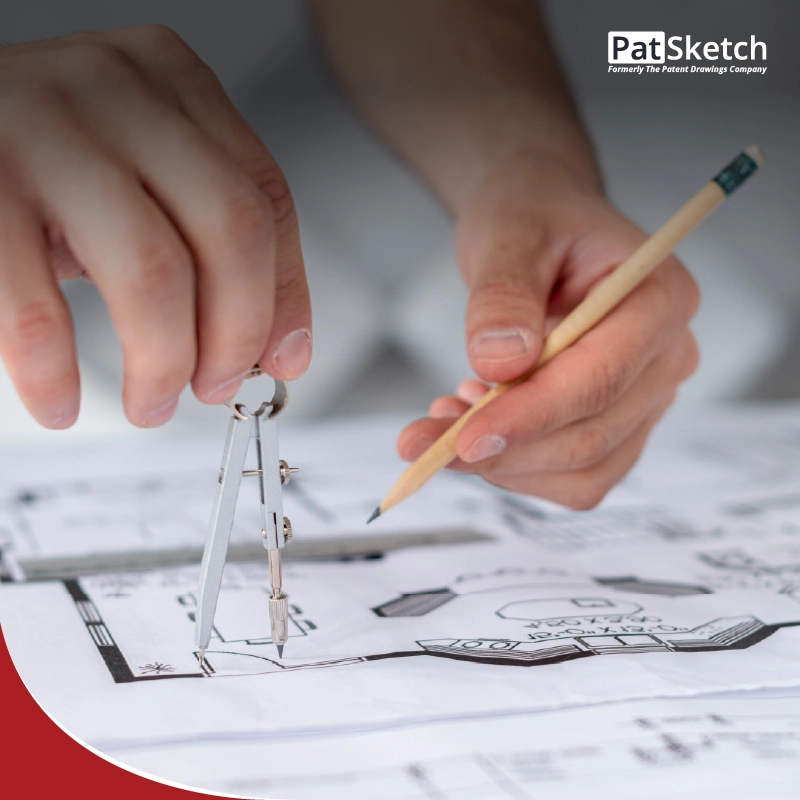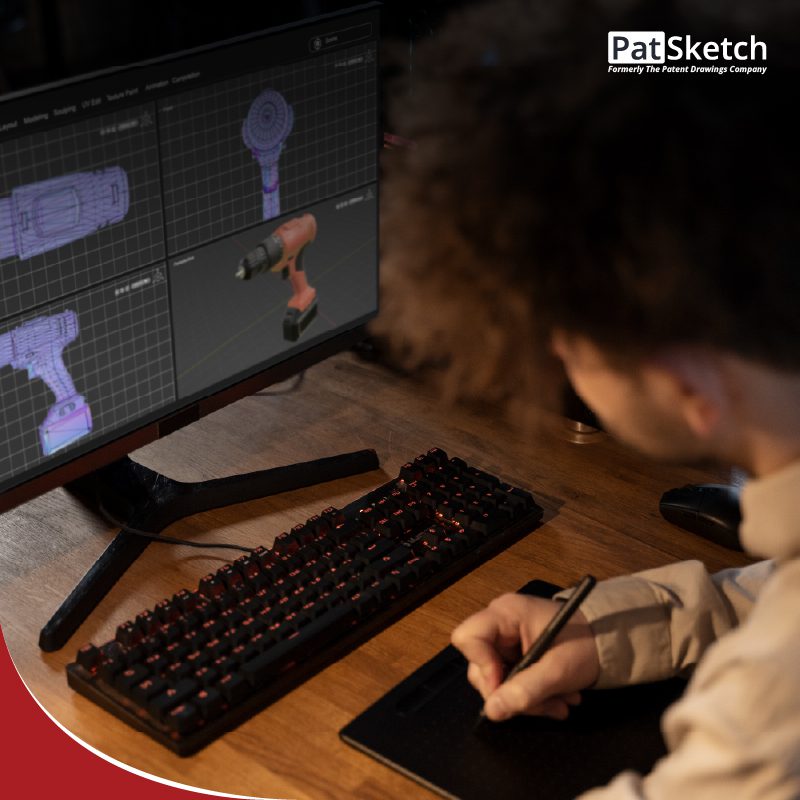
Shading and cross-hatching play a critical role in patent drawings. They are not decorative elements; rather, they are technical tools used to clearly convey the structure, depth, contours, and material distinctions of an invention. When applied correctly, they enhance clarity and support patentability. When misapplied, they can lead to objections, redraw requests, or even rejection by patent offices.
This article explains the correct use of shading and cross-hatching in patent drawings, aligned with USPTO, EPO, and international drawing standards. It highlights best practices to ensure compliance and examiner acceptance.
Table of Contents
ToggleWhat Is Shading in Patent Drawings?
Shading is used to represent surface contours, curvature, and three-dimensional form in patent drawings. It helps examiners understand the spatial relationship between elements, especially in mechanical, industrial design, and consumer product inventions.
Key Rules for Shading
- Shading must be light, uniform, and consistent
- It should never obscure reference numerals or lead lines
- It must not interfere with the clarity of edges or outlines
- Excessive shading that affects legibility is not permitted
Shading is commonly used in:
- Design patent drawings
- Perspective views
- Drawings where depth or curvature is essential to understanding the invention
What Is Cross-Hatching in Patent Drawings?
Cross-hatching consists of parallel lines used primarily in sectional views to indicate cut surfaces. It may also be used to distinguish different materials when required.
Standard Cross-Hatching Guidelines
- Lines are generally drawn at approximately 45°
- Spacing must be even and consistent
- Hatch lines must not cross or touch reference numerals
- Adjacent parts should not share identical hatching if they represent different components or materials
Cross-hatching is especially important in:
- Sectional views
- Mechanical and industrial inventions
- Drawings requiring material differentiation
USPTO Requirements for Shading and Cross-Hatching
Under 37 C.F.R. § 1.84, the USPTO allows shading and cross-hatching provided they meet strict clarity requirements.
USPTO Best Practices
- Cross-hatching in sectional views should be uniform and angled consistently
- Different materials may be shown using distinct hatch patterns, if necessary
- Shading must not obscure reference characters
- Line quality must remain reproducible in black and white
Evolving USPTO Practice (2025)
The USPTO is gradually becoming more flexible:
- Limited acceptance of color drawings in specific cases
- Consideration of supplemental formats (e.g., 3D models) where appropriate
However, black-and-white line drawings remain the safest and most widely accepted standard.
EPO Requirements and Recent Updates
EPO Update (Effective 1 October 2025)
The European Patent Office now allows color and grayscale drawings when filed electronically, provided that:
- The drawings are clear and reproducible
- Resolution and formatting requirements are met
- Color is essential to understanding the invention
Despite this update, black-and-white drawings remain the preferred and safest approach in most EPO filings, especially for technical inventions.
EPO Best Practices
- Shading should be used sparingly and only where necessary
- Cross-hatching must be clear and consistent
- Excessive tonal variation should be avoided
- All elements must remain easily reproducible in monochrome formats
International (PCT/WIPO) Considerations
Under WIPO drawing standards, shading and cross-hatching are permitted but must:
- Be clear when reproduced in black and white
- Not interfere with reference numerals
- Follow consistent patterns throughout the drawing set
Because PCT applications may enter multiple national phases, conservative and standardized drawing practices are strongly recommended.
Common Mistakes to Avoid
- Over-shading that reduces clarity
- Hatching that overlaps reference numerals
- Inconsistent hatch angles across views
- Using shading for decorative purposes
- Mixing shading and hatching without a clear intent
- Using color when it is not essential
These errors frequently result in office actions or redraw requests, increasing both time and cost.
Best-Practice Checklist for Patent Drawings
- Use shading only to convey depth or curvature
- Keep hatch lines at consistent angles and spacing
- Ensure all numerals remain fully legible
- Maintain uniform style across all figures
- Follow jurisdiction-specific requirements
- When in doubt, choose clarity over aesthetics
Why Professional Patent Drawings Matter
Shading and cross-hatching require technical precision and regulatory awareness. Even small inconsistencies can lead to objections that delay prosecution or require costly corrections.
Professional patent illustrators:
- Understand examiner expectations
- Apply shading and hatching correctly across jurisdictions
- Reduce the risk of formal drawing objections
- Deliver drawings ready for filing without rework
Conclusion
Shading and cross-hatching are essential tools in patent drawings when used correctly. They improve clarity, convey structural detail, and support examiner understanding. However, misuse can undermine an otherwise strong patent application.
By following USPTO, EPO, and international standards, and by relying on experienced patent drawing professionals, applicants can ensure their drawings meet both technical and legal requirements, from filing through grant.