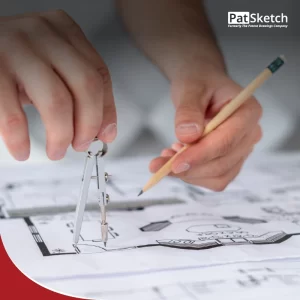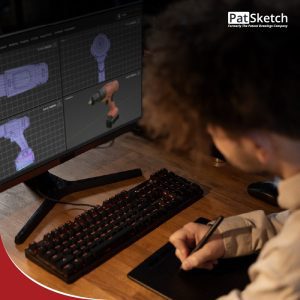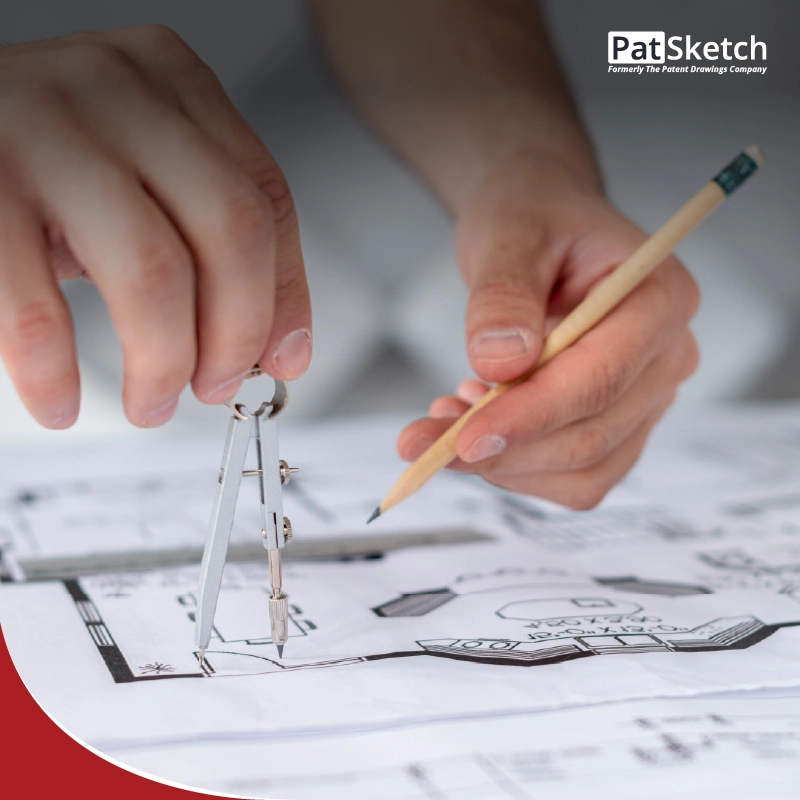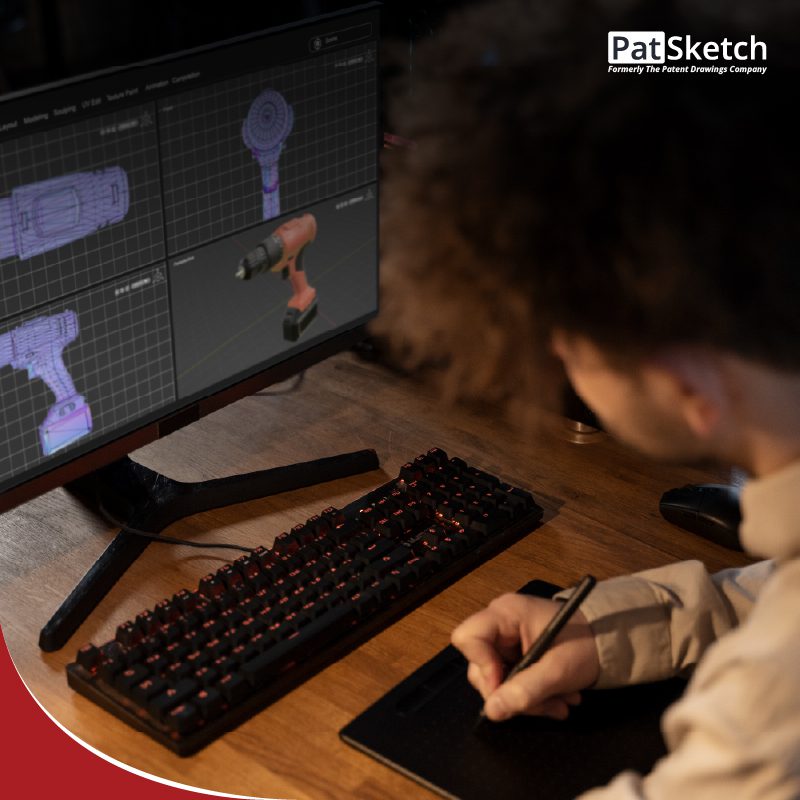
Patent drawings are a critical component of a U.S. patent application. Governed by strict standards set by the United States Patent and Trademark Office, these drawings must meet precise requirements for format, clarity, and consistency. Failure to comply can result in objections, delays, or even rejection of your application.
This comprehensive guide explains the latest USPTO patent drawing rules, along with practical insights and common mistakes to avoid, helping you ensure a smooth and efficient patent examination process.
Table of Contents
ToggleWhen Are Patent Drawings Required?
Under USPTO regulations (37 C.F.R. § 1.81 and § 1.84), drawings are required whenever they are necessary to understand the claimed invention.
Drawings are typically required for:
- Mechanical inventions
- Devices and systems
- Processes involving visual representation
In some cases, such as purely theoretical or text-based inventions, drawings may not be mandatory. However, most utility patent applications benefit significantly from including drawings to improve clarity.
If required drawings are missing or insufficient, the USPTO may issue a notice requiring submission within a specified time, usually two months. Failure to comply within this period may delay examination.
USPTO Drawing Format and Size Requirements
The USPTO enforces strict formatting rules to ensure uniformity and reproducibility across all patent drawings.
Paper Size and Type
Drawings must be submitted on:
- A4 size (21 × 29.7 cm) or
- U.S. Letter size (21.6 × 27.9 cm)
The sheets must be white, non-shiny, and flexible.
Margins
Each drawing sheet must follow these margin requirements:
- Top: 2.5 cm
- Left: 2.5 cm
- Right: 1.5 cm
- Bottom: 1.0 cm
Drawing Standards
- Drawings must be executed in black ink, typically India ink or an equivalent
- All lines and text must remain clear when reduced to two-thirds of their original size
- Uniform line thickness should be maintained throughout
Color drawings are not permitted unless a petition is filed with the USPTO and the appropriate fee is paid. Even then, approval is granted only in limited circumstances.
Types of Views Required in Patent Drawings
Patent drawings must include all views necessary to disclose the invention fully. The purpose is to ensure that the invention can be clearly understood without ambiguity.
Common Types of Views
- Front view
- Top view
- Side view
- Sectional view
- Exploded view
- Perspective view
At least one figure should be suitable for publication on the front page of the patent.
Views should be arranged logically and must not be connected by projection lines. Overly complex or cluttered drawings should be avoided, as they may hinder clarity and lead to objections.
Numbering, Reference Characters, and Labels
Accurate and consistent labeling is essential for compliance with USPTO requirements.
Key Rules
- Figures must be numbered sequentially (Fig. 1, Fig. 2, etc.)
- Each element in the drawing must be assigned a reference numeral
- The same element must use the same reference numeral across all figures
Reference numerals must correspond exactly with the written description in the specification. Any inconsistency between the drawings and the specification can result in objections.
Common Issues to Avoid
- Reusing the same numeral for different elements
- Overcrowding figures with excessive labels
- Placing reference numerals in a way that obscures the drawing
Maintaining clarity and consistency in labeling significantly improves the readability and acceptance of the application.
Line Quality, Shading, and Symbols
The USPTO prioritizes clarity and reproducibility in all patent drawings.
Line Quality
- Use solid black lines with consistent thickness
- Ensure all lines are sharp, clean, and well-defined
Shading
- Shading should be used sparingly and only when necessary to illustrate depth or contour
- Solid black shading is generally not permitted except in specific cases such as graphs
Symbols and Text
- Use standard symbols where applicable
- Ensure all text is legible and not overly stylized
Excessive artistic elements, gradients, or decorative features should be avoided, as they may not reproduce well and could lead to objections.
Special Cases: Photographs, Color Drawings, and Replacement Sheets
Photographs
Photographs are generally not accepted unless they are the only practical way to illustrate the invention. This may apply to:
- Biological materials
- Microscopic structures
- Gel electrophoresis images
In such cases, the photographs must be of high quality and suitable for reproduction.
Color Drawings
Color drawings are permitted only under exceptional circumstances. A formal petition must be submitted along with the required fee. Additionally, the application must include a statement indicating that color drawings are included.
Replacement and New Sheets
If drawings are modified after submission, the updated sheets must be clearly labeled as:
- “Replacement Sheet” or
- “New Sheet”
This ensures that the USPTO can accurately process the changes.
PCT and National Stage Considerations
For applications entering the United States through the Patent Cooperation Treaty (PCT), the USPTO generally follows the drawing standards outlined in PCT Rule 11.
While additional requirements are typically not imposed, discrepancies between PCT drawings and USPTO expectations may still require correction during examination. It is advisable to ensure consistency with USPTO standards even when filing internationally.
Common USPTO Drawing Objections
Non-compliant drawings are one of the most common reasons for delays in patent examination.
Frequent Objections Include
- Illegible text or reference numerals
- Incorrect margin dimensions
- Missing or incomplete views
- Inconsistent numbering of elements
- Poor line quality or low contrast
- Overcrowded or unclear figures
These issues can result in office actions, increased prosecution costs, and delays in patent approval.
Best Practices for USPTO-Compliant Drawings
To ensure compliance and minimize the risk of objections, consider the following best practices:
- Maintain high contrast and clarity in all drawings
- Use consistent reference numerals across all figures
- Keep drawings simple, clean, and well-organized
- Avoid unnecessary shading or artistic styling
- Ensure proper spacing and margin compliance
- Retain editable source files for quick revisions
Following these practices not only improves compliance but also enhances the overall quality of the patent application.
Why Patent Drawing Compliance Matters
Adhering to USPTO drawing rules is essential for both procedural and strategic reasons.
Key Benefits
- Faster examination and reduced delays
- Lower risk of objections and rework
- Improved clarity of the invention
- Stronger and more enforceable patent protection
Poor-quality or non-compliant drawings can significantly impact the success of a patent application, making compliance a critical aspect of the filing process.
Conclusion
USPTO patent drawing rules are designed to ensure clarity, consistency, and reproducibility in patent applications. By adhering to these guidelines, applicants can reduce the risk of objections, avoid delays, and improve the likelihood of successful patent approval.
Whether preparing a new application or updating existing drawings, following these standards is essential for an efficient and effective patent filing process.