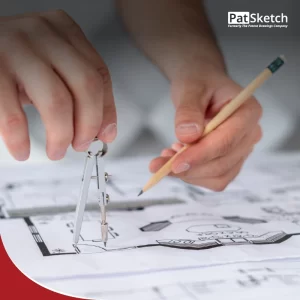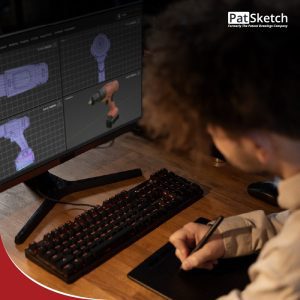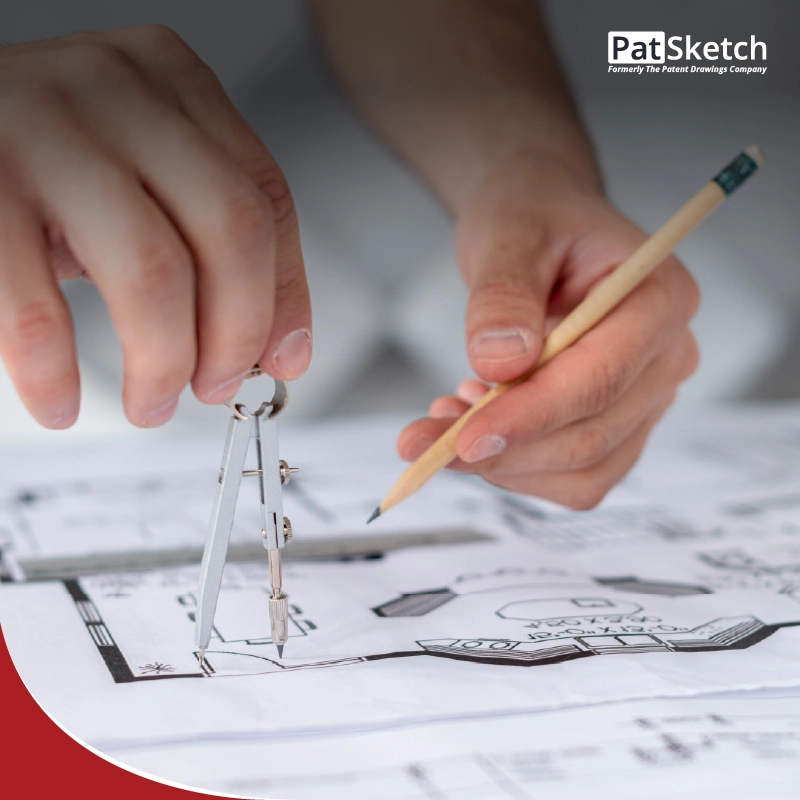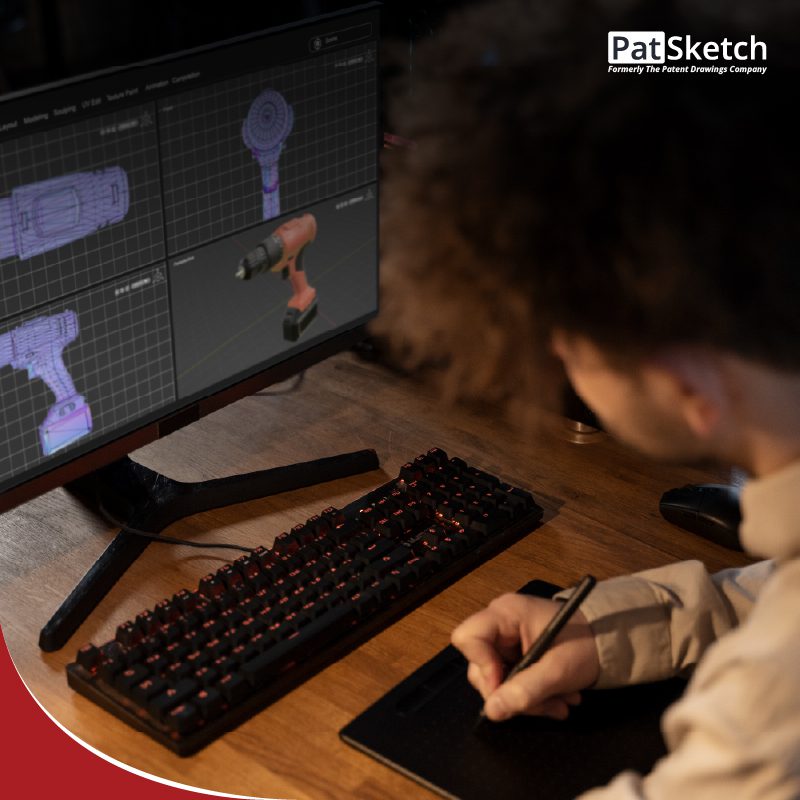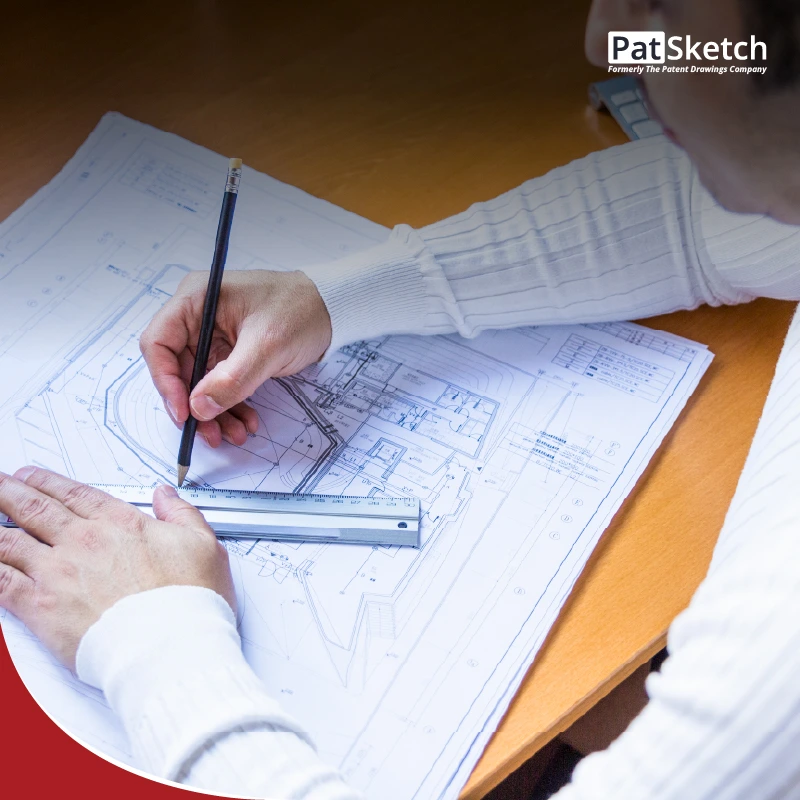
Patent illustrations are one of the most important components of a strong patent application. High-quality drawings help patent examiners understand the invention quickly, clarify complex features, and strengthen the scope of the claims.
However, patent drawing requirements vary depending on whether the application is filed as a provisional application, an international PCT application, or a national phase filing. Each stage comes with specific formal rules that must be followed carefully to avoid objections or delays.
This guide explains the key drawing requirements across patent application types and highlights best practices to ensure compliance with USPTO, PCT (WIPO), and other international patent office standards.
Table of Contents
ToggleWhy Patent Illustrations Matter in Patent Applications
Patent drawings are not simply visual aids, they are legal and technical documents that support the written specification. Well-prepared illustrations can:
- Improve the clarity of the invention
- Help examiners interpret the claims accurately
- Reduce misunderstandings during the examination
- Strengthen enforceability by clearly showing inventive elements
In many jurisdictions, drawings are required whenever the invention can be illustrated.
Drawing Requirements in Provisional Patent Applications
A provisional patent application is often the first filing step for inventors seeking an early priority date.
Are Drawings Mandatory in Provisional Applications?
Drawings are generally optional in provisional applications. However, they are strongly recommended when they help explain the invention more clearly.
Including drawings in a provisional application can:
- Improve the completeness of the disclosure
- Support later claims in a non-provisional filing
- Reduce the risk of missing critical invention details
Even though provisional applications are not examined like full utility filings, drawings can play an important role in establishing proper written support for future patent protection.
Patent Drawing Requirements Under the PCT (International Applications)
The Patent Cooperation Treaty (PCT) allows applicants to file one international application that may later enter multiple countries.
Line Drawings Are the Standard Under PCT Rules
Under PCT Rule 11, patent drawings must follow strict formal requirements. In most cases:
- Drawings must be clear, black-and-white line illustrations
- Photographs and grayscale shading are generally not accepted
- Exceptions are extremely limited and only allowed when a line drawing is impossible (for example, certain biological specimens)
Applicants should assume that black-and-white line drawings are mandatory for international compliance.
Key Formal Requirements Under PCT Rule 11
International patent drawings must meet specific formatting standards, including:
- Drawings submitted on separate sheets
- Standard paper size (A4)
- Prescribed margins
- Uniform line thickness suitable for reproduction
- Minimal text usage (only where necessary)
Failure to comply may result in formal objections and requests for replacement drawings.
Patent Drawing Requirements in National Phase Applications
After the international PCT stage, applicants enter the national phase, where each patent office applies its own drawing rules.
For example:
- The USPTO follows strict requirements under 37 CFR 1.84
- The EPO has detailed formatting rules for figure presentation
- The Indian Patent Office requires clear reference numerals and formal sheet compliance
Although national rules differ slightly, most patent offices expect:
- Consistent figure numbering
- Proper margins and spacing
- High-contrast line drawings
- No decorative shading or color
Drawings must clearly support the claimed invention and meet formal office standards.
Common Patent Drawing Defects That Lead to Office Objections
Patent offices frequently issue office actions related to drawing compliance. These are usually formal objections, not substantive patentability rejections.
Common drawing defects include:
- Missing reference numerals
- Inconsistent numbering across figures
- Improper margins or sheet layout
- Illegible line quality or poor contrast
- Use of photographs or grayscale shading
- Decorative elements that reduce clarity
Drawing-related objections must be corrected within the deadline provided by the patent office, or the application may be considered non-compliant.
Best Practices for Patent-Compliant Drawings
To ensure your patent illustrations meet international standards, follow these best practices:
1. Use Consistent Reference Numerals
Every part shown in the drawings should have a clear reference numeral, used consistently throughout all figures and the written description.
2. Ensure All Claimed Elements Are Illustrated
Each feature mentioned in the claims should appear in at least one figure in the drawings.
3. Maintain Proper Line Quality
Use a clean, uniform line thickness suitable for high-quality reproduction.
4. Avoid Color, Shading, and Photographs
Most patent offices require black-and-white line drawings. Shading and photographs should only be used when explicitly permitted.
5. Follow Figure Labeling Standards
Figures should be numbered clearly (Fig. 1, Fig. 2, etc.) and arranged logically.
6. Work With Professional Patent Drawing Specialists
Professional drafting services help ensure compliance with USPTO, PCT, and international drawing rules while reducing the risk of costly revisions.
Responding to Drawing Objections and Compliance Deadlines
If a patent office finds drawing issues, applicants must respond within the timeline set by that jurisdiction.
Deadlines vary depending on:
- Country of filing
- Application stage
- Type of objection issued
Timely submission of corrected drawings is essential to avoid delays or procedural complications.
Conclusion
Patent drawings are not optional visuals; they are a critical part of patent disclosure and compliance. Whether filing a provisional application, an international PCT application, or entering national phase jurisdictions, applicants must ensure their illustrations meet formal patent office requirements.
By following international standards such as PCT Rule 11, USPTO formatting rules, and best drafting practices, inventors and businesses can strengthen their applications and avoid unnecessary objections.
Professional patent illustration services can help ensure your drawings are accurate, compliant, and ready for successful patent prosecution.