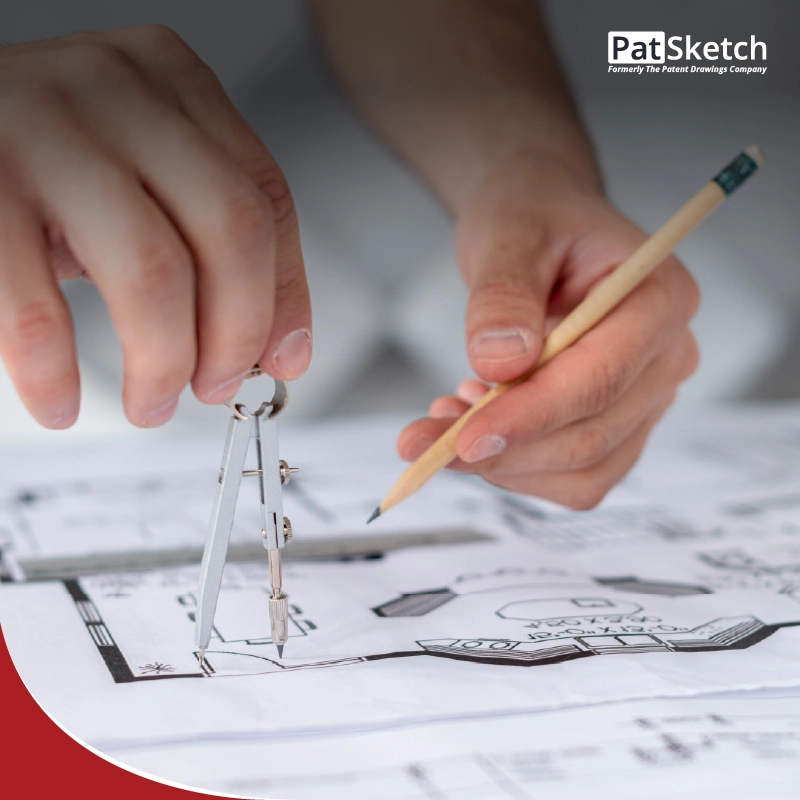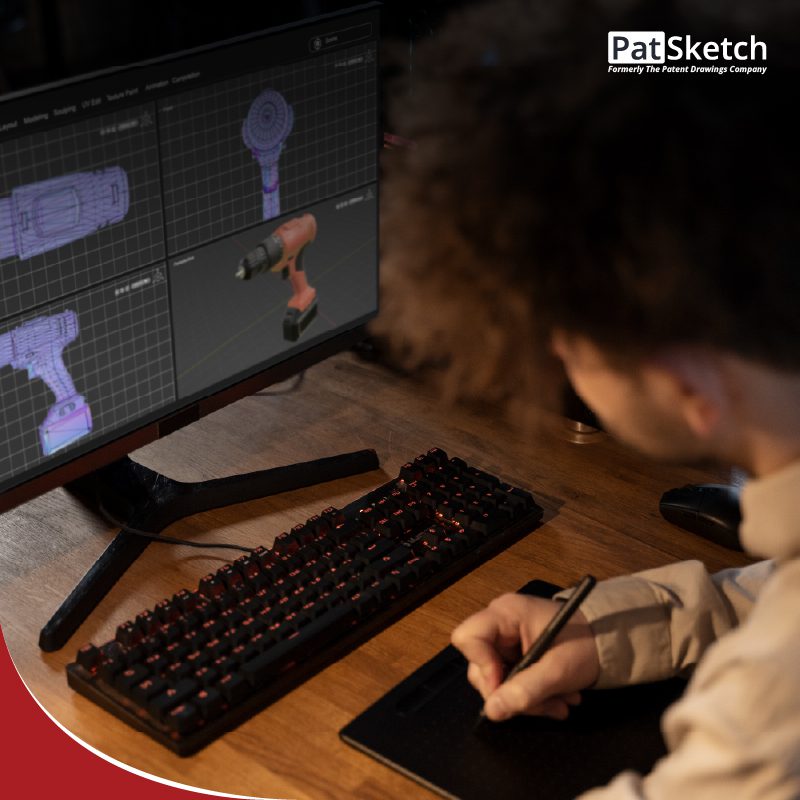
Patent drawings are no longer just formal attachments to a patent application. In 2025, they function as strategic visual assets, helping patent examiners quickly understand complex inventions, reducing office actions, and strengthening enforceability across jurisdictions.
Well‑prepared patent drawings bridge the gap between written claims and technical reality. When done right, they improve examination efficiency, support broader claim interpretation, and add long‑term legal value.
This guide combines global best practices, industry‑specific examples, and the latest patent office updates to help inventors, attorneys, and businesses prepare patent drawings that are both compliant and compelling.
Why Patent Drawings Matter More Than Ever
Patent drawings visually define the structure, function, and relationships of an invention, often conveying information that words alone cannot.
High‑quality drawings can:
- Accelerate patent examination
- Reduce objections and office actions
- Clarify claim scope
- Strengthen enforcement and litigation outcomes
- Improve consistency across global filings
Given evolving standards at offices such as the USPTO, EPO, CNIPA, JPO, and WIPO, drawing compliance is no longer optional—it is strategic.
Global Patent Drawing Standards (2025 Overview)
USPTO (United States)
- Black‑and‑white drawings remain the standard
- Solid black lines with clear contrast are required
- Backgrounds such as graph paper are prohibited
- Design patents require appropriate shading to show surface contours and depth
Non‑compliant drawings are a frequent cause of formal objections in U.S. filings.
European Patent Office (EPO – Key 2025 Update)
From October 1, 2025, the EPO allows color and grayscale drawings when filed electronically, subject to formal requirements:
- Colors must be high‑contrast and suitable for a 300‑dpi display
- No color references should appear in claims or descriptions
- Color acceptance in Europe does not replace black‑and‑white requirements elsewhere
For global strategies, applicants should still maintain dual drawing sets.
PCT / WIPO
- Drawings are required only when essential for understanding the invention
- Most PCT publications convert drawings to black and white
- Clarity and line density remain critical
Core International Drawing Principles
Regardless of jurisdiction, successful patent drawings follow these fundamentals:
- Clear, dense black lines
- Consistent line weights and lettering
- Reference numerals that exactly match the specification
- Logical figure sequencing
- Scalable clarity at reduced publication sizes
Essential Types of Patent Drawing Views
To fully disclose an invention, drawings often include multiple complementary views:
1. Orthogonal Views
Front, top, side, and rear views illustrate the overall shape and external features.
2. Isometric & Perspective Views
Three‑dimensional views help examiners visualize part relationships and spatial structure.
3. Exploded & Sub‑Assembly Views
Critical for mechanical inventions, these views show how components fit and function together.
4. Cross‑Sectional Views
Used to reveal internal mechanisms, fluid pathways, electrical routing, or layered structures.
5. Functional & Flow Diagrams
Arrows, symbols, and flowcharts illustrate movement, process steps, logic sequences, or energy flow.
Industry‑Specific Patent Drawing Best Practices
Different technologies demand different visual strategies. Below are the best practices by industry.
Mechanical Inventions
- Use exploded views and sectional drawings
- Clearly show moving parts and assemblies
- Apply arrows to demonstrate motion or interaction
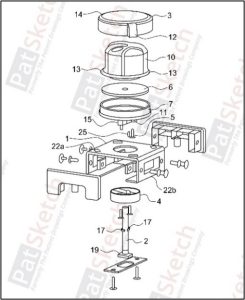
Fig No. 01
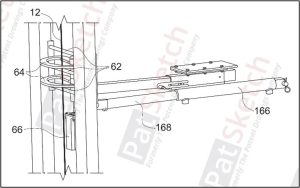
Fig No. 02
Electrical and Electronic Equipment Inventions
- Combine circuit schematics with functional flow diagrams
- Maintain consistent reference numerals across figures
- Clearly illustrate signal, power, or data flow
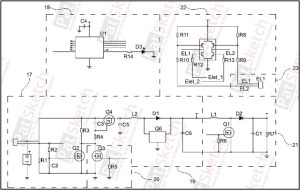
Fig No. 03
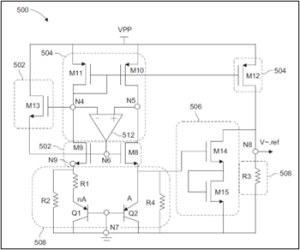
Fig No. 04
Chemical Formulations
Chemical inventions require drawings that translate molecular complexity into explicit visual representations. Effective patent illustrations for chemical formulations often include:
- Structural formula diagrams showing exact atom-to-atom connections
- Reaction sequence flowcharts mapping each step of synthesis or transformation
- Process schematics depicting reaction conditions, equipment setup, and intermediate compounds
- 3D configurations or perspective views highlighting stereochemistry or unique spatial arrangements
These visuals help examiners and practitioners quickly understand molecular interactions, points of novelty, and the overall process.
Design Patents
- Provide complete sets of views (front, rear, top, bottom, sides)
- Use shading to show contours and surface character
- Maintain a consistent perspective and scale
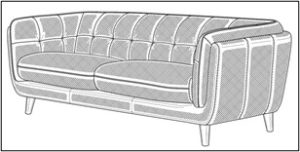
Fig No. 05
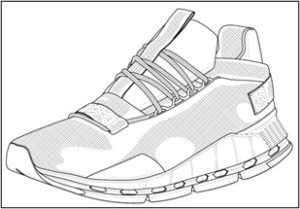
Fig No. 06
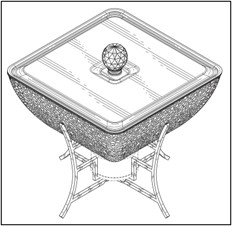
Fig No. 07
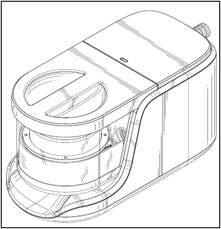
Fig No. 08
Biotechnological Inventions
Biotech patents require drawings that bridge molecular detail and experimental context. Effective illustrations combine schematics of genetic sequences with renderings of cellular or protein structures, and flowcharts of key methodologies. These visuals transform complex biological processes into clear, actionable visuals by mapping DNA or RNA arrangements, highlighting protein domains, and outlining steps such as cloning or expression protocols.
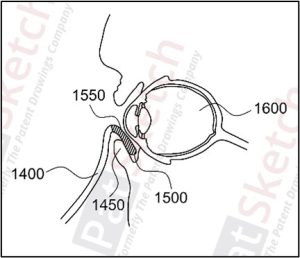
Fig No. 09
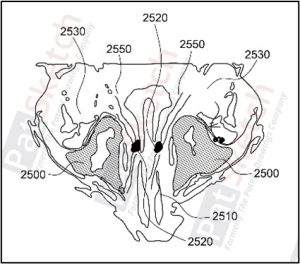
Fig No. 10
Interactive User Interfaces
- Illustrate screen layouts with annotations
- Include state diagrams or interaction flows
- Show transitions between interface states
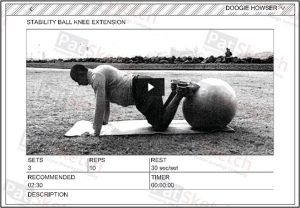
Fig No. 11

Fig No. 12
Medical Devices
- Include drawings of the device in use
- Show exploded views and internal cross‑sections
- Add contextual illustrations demonstrating interaction with anatomy
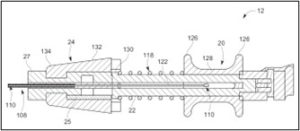
Fig No. 13
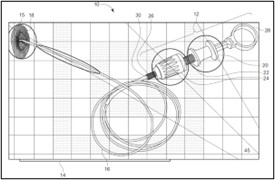
Fig No. 14
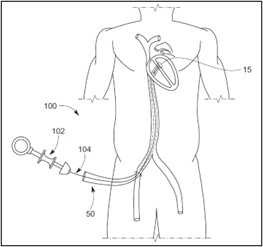
Fig No. 15
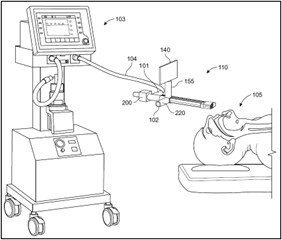
Fig No. 16
Automotive Innovations
- Combine mechanical drawings with system‑level diagrams
- Show environmental context (energy flow, sensors, control systems)
- In robotics, overlay data and control flow where relevant
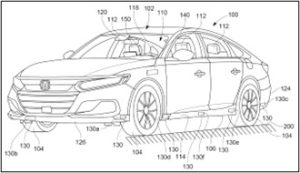
Fig No. 17
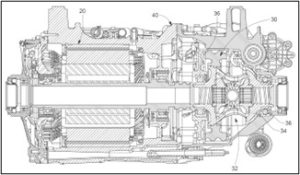
Fig No. 18
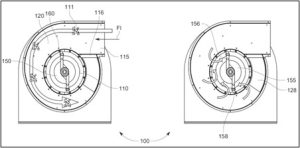
Fig No. 19
Sustainable Energy Solutions
Patent drawings for sustainable energy solutions should map the technical systems and their ecological context. Strong illustrations depict key components: solar panels, wind turbines, storage units, and the energy flow between them. Contextual insets or flow diagrams can show how the invention integrates on-site and reduces environmental impact, immediately clarifying both function and green benefits.
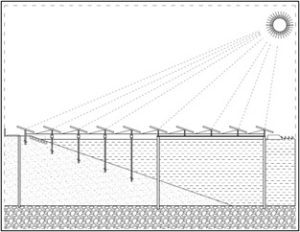
Fig No. 20
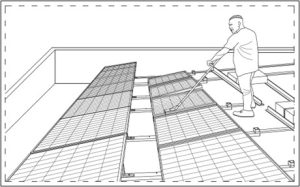
Fig No. 21
Robotics and AI
Patent drawings for robotics and AI inventions must capture hardware and intelligence in a cohesive visual narrative. Compelling illustrations combine orthogonal or isometric views of the robot’s frame and joints with callouts for sensors and actuators. Complementary flow diagrams or overlays can represent decision-making pathways, whether obstacle avoidance, object recognition, or coordinated movement sequences, so that examiners instantly grasp how the physical form and software logic work together.
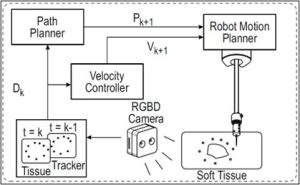
Fig No. 22
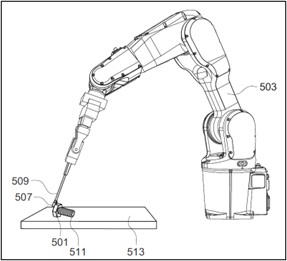
Fig No. 23
Tools, AI & Emerging Trends in Patent Drawings
In 2025, patent drafting increasingly integrate AI‑assisted tools that align specifications and drawings.
Modern workflows may include:
- AI‑generated base sketches from technical descriptions
- Claim‑to‑figure alignment tools
- Collaborative drafting platforms combining text and visuals
However, AI augments professional draftsmen; it does not replace them. Human expertise remains essential to ensure:
- Legal compliance
- Accurate interpretation of claims
- Jurisdiction‑specific formatting
Conclusion: Turning Patent Drawings into Strategic Assets
High‑quality patent drawings:
- Clarify the invention’s structure and function
- Meet evolving global patent office standards
- Reduce prosecution risks
- Strengthen enforceability and long‑term IP value
By combining global compliance awareness, industry‑specific visualization, and best‑practice execution, inventors and patent professionals can ensure that patent drawings accelerate protection instead of delaying it. Well‑crafted drawings don’t just illustrate inventions; they protect them.
PatSketch
At The Patent Drawings Company, we provide expert patent drawings services that meet the highest standards of accuracy and compliance. Our team specializes in both utility patent drawings services and design patent drawings services, delivering detailed, USPTO-compliant illustrations tailored to your specific invention.
Whether you’re patenting a complex mechanical device or a sleek product design, our drawings help bring your ideas to life with clarity and precision. Trust us to be your partner in the patent process.